Joe Capote

Home Sellers: Top 5 Home Improvement Projects Based on Cost and Return on Investment | RISMedia

gardening

RISMEDIA, November 10, 2009—HomeGain.com, one of the first websites to offer Web-based free instant home values, announced that it has released the results of its nationwide home improvement and home staging Home Sale Maximizer survey. 

HomeGain’s recent survey shows the top do-it-yourself home improvements that Realtors recommend to home sellers. HomeGain received responses from nearly 1,000 Realtors nationwide and configured a list of the top 12 do-it-yourself (DIY) home improvements that cost under $5,000 and benefit sellers most when they sell their homes. 

According to the HomeGain survey, the top five home improvements that Realtors recommend to home sellers based on cost and return on investment (from highest to lowest ROI) are: 

1. Cleaning and de-cluttering ($200 cost / $1,700 price increase / 872% ROI)
2. Home staging ($300 cost / $1,780 price increase / 586% ROI)
3. Lightening and brightening ($230 cost / $1,300 price increase / 572% ROI)
4. Landscaping ($320 cost / $1,500 price increase / 473% ROI)
5. Repairing plumbing ($385 cost / $1,250 price increase / 327% ROI) 

Cleaning and de-cluttering continues to rank as the top suggested home improvement (since the survey was originally conducted in 2000), recommended by 98% of Realtors, costing less than $200 and returning a value of nearly $1,700 to the home’s sale price, or an 872% return on investment. 

“Many Realtors agree, especially in a buyer’s market, that sellers who make these recommended home improvements often get their homes sold faster and at higher prices,” stated Louis Cammarosano, General Manager at HomeGain. “We have customized our Home Sale Maximizer online home improvement tool to help identify and prioritize the projects that can increase the salability and selling price of a home.” 

Rounding out the top 12, the list of low cost, do-it-yourself home improvements includes: updating electrical, replacing or shampooing carpets, painting interior walls, repairing damaged floors, updating kitchen, painting outside of home, and updating bathroom/s.

The home improvement projects with the highest price increases to a home’s resale value are updating the kitchen ($1,200 cost / $2,850 price increase), followed by painting the outside of the home ($900 cost / $1,815 price increase) and home staging ($300 cost / $1,780 price increase). 

“Inexpensive cosmetic home improvements and basic improvements greatly enhance the value of the home,” stated Carol Wilson of Carpenter Real Estate in Indianapolis, IN, HomeGain AgentEvaluator member since 1999. 

For more information, visit www.homegain.com

RISMedia welcomes your questions and comments. Send your e-mail to: realestatemagazinefeedback@rismedia.com

Don’t miss these top headlines on RISMedia.com:
Home Buyers Want to Save Energy – but Only at Right Price
Taking Advantage of Negotiation – U.S. Homebuyers Paid $7,039 Less Than Listing Price in July


Clutter. It takes away from any homes value. For good resources on decluttering, check out this guy who was on Oprah, http://www.oprah.com/article/oprahshow/home_20070207_declutter. Also, you check out <a href="http://unclutterer.com/2009/02/17/instructions-for-decluttering-your-home-in-less-than-500-words/.

http://unclutterer.com/2009/02/17/instructions-for-decluttering-your-home-in-less-than-500-words/.</p>

Posted via web from josephcapote’s posterous

Filed under: Uncategorized

First Time Homebuyer Tax Credit Extension Approved by Congress

It’s (mostly) official. After two weeks of delays, congress has voted to extend the first time homebuyer tax credit. The Senate voted 98-0 on Wednesday and yesterday the House voted 403-12 on legislation that includes the extension and expansion of the credit. The President is expected to sign the legislation, perhaps as early as today.

The new tax credit extension has a few differences. For example, income limits have been raised to $125,000 for a single buyer, $225,000 thousand for a married couple. This limit is bumped up from $150k total, and is a good move for areas where the cost of living is higher (like ours). Another difference a tax credit has been added for move-up buyers. Current homeowners could now be eligible for a $6500 tax credit for selling their current home and purchasing a new home.

For a brief the of changes to the homebuyer tax credit extension, the NAR has a good breakdown of the information HERE. There is also a really helpful list of FAQ’s from the NAR posted HERE.

Filed under: Buyer's Blog, Seller's Blog, , ,

The Road to Foreclosure – Part 2 – Loan Modifications

This post is part 2 in a series on understanding a borrower’s road to the foreclosure. This series attempts to help borrowers to make better choices and retain their options through better understanding of the foreclosure process as a whole.

What is a loan modification?
Answers.com defines loan  modifications as ” a modification to an existing loan made by a lender in response to a borrower’s long-term inability to repay the loan. Loan modifications typically involve a reduction in the interest rate on the loan, an extension of the length of the term of the loan, a different type of loan or any combination of the three. A lender might be open to modifying a loan because the cost of doing so is less than the cost of default.” (http://www.answers.com/topic/loan-modification, par 1).

What makes a loan modification possible?
When a borrower has defaulted on the loan, generally the first step should be to investigate a loan modification. In the first entry in the series, it was pointed out that a loan modification is not a right of the borrower and is dependent upon the lender’s willingness to negotiate. While this is true, new programs are cropping up in an effort to promote guidelines and standardize loan modifications, such as the HAMP (Home Affordable Modification Program) which offer guides to the modifcations of first mortgages only. Lenders that have received TARP funds are required to participate in the HAMP program. More on this a little later in the post.

The current state of loan modifcations is a hodgepodge of lenders and possible programs. Addtionally, unscrupulous characters in both the real estate and legal professions have added to the confusion regarding what a loan modification is and who qualifies. Since the modification is really been dependent on the lender’s willingness to negotiate, this has resulted in a lot of consusion and leads folks to believe they could receive a loan modifcation based on the experience of someone they already know receiving one. For example, “My neighbor Joe modifed his loan, and I should be able to do the same at the same terms”.  Since each loan modification case is handled differently, even by the same lender, this is most always not true and adds to the already abundant confusion around loan modifications.

What about loan modificaton fraud?
The current amount of loan modification fraud awareness has reached the desks of the regulators. The California Department of Real Estate and the California Bar Association have investigated and/or taken action against realtors and lawyers who have been unscrupulously promoting loan modification services and not delivering. Scam artists will make lofty promises requiring an upfront fee and then never be heard from again. The list of lawyers under investigation is HERE. The California Department of Real Estate now has more than 1,340 open investigations into loan modification scams around the state, up from just 10 in August 2008 (More info on this HERE). In fact, the state attorney general has issued ways to help borrowers recognize and avoid loan modification scams, that is posted HERE.

The good news is, the government is attempting to regulate and standardize loan modifications. Programs like the Home Affordable Modification Program (or HAMP) are setting the stage for both borrower and lender to understand and participate in loan modifications under standardized guidelines, not just on a case by case basis. This program also standardizes the loan modification terms, conditions and length. There is a lot to know about the HAMP, and the official website is HERE. Additionally, the California state bar does recognize a VERY small number of lawyers who are qualifed to represent borrowers on loan modifcations. Check out this list at http://www.localloanmodification.com/CA.

Initiate loan modification as soon as loan default is imminent.
Many lenders require that a borrower be in default before the loan modification process can begin. The HAMP program requires the borrower be in default or “at risk of imminent default”. This depends on the lender, but generally is true. However, if the borrower has a choice they should try to modify the loan before defaulting, thereby preserving their credit rating as much as possible. This is especially true if the borrower can prove the ‘risk of imminent default”. Clearly, lenders are trying to protect themselves against borrowers attempting to modify loans who do currently have the means to continue to keep current.

Here is the takeaway for borrowers. If loan modification is the goal, then the borrower should begin contacting lenders as soon as default is imminent. They should attempt to work out a loan modification with their lender under the HAMP guidelines. They should be communicative and ready to submit all pertinent documentation to prove that default is imminent (w2’s, tax returns, pay stubs, etc). If the lender is not willing to negotiate, consider free credit counseling or  consider contacting an attorney who not only specializes but is recognized by the state bar as a qualified loan modification specialist. Be persistent when working with lenders.

Unfortunately, there are cases where a borrower just will not qualify for a loan modification, and must begin to cosinder the next option. Selling the home in pre-foreclosure or short sale. That is the next chapter in the road to foreclosure series.

Filed under: Buyer's Blog, Seller's Blog, ,

Senate Clears Homebuyer Tax Credit Extension; May Pass as Early as This Week | RISMedia

Senate Clears Homebuyer Tax Credit Extension; May Pass as Early as This Week

By Steve Cook and Brett ArendsPrint Article Print Article

senate_1105RISMEDIA, November 5, 2009—After two weeks of delay, the Senate cleared the way to pass a seven month extension and expansion of the tax credit for homebuyers. By an 85 to 2 roll call vote, the Senate voted to cut off debate on a package of measures that includes the homebuyer credit, making it virtually certain that the legislation will reach President Obama for his signature this week. 

The homebuyer tax credit, due to expire at the end of November would be extended through April 30 of next year. First-time buyers who are in the process of making a purchase would not need to worry about qualifying for the $8,000 credit if they close after the November 30 deadline. 

For the first time, the legislation that was recently cleared makes move-up buyers as well as first-time buyers eligible for a credit. The $8,000 maximum first-timer credit will continue and will now be available to couples with income up to $225,000, a nearly $55,000 increase above the level in existing law. A new $6,500 maximum credit would also be available to move-up homeowners who have lived in their current residence for five of the prior eight years. 

For homebuyers across the country, the expanded tax credit would allow more people to qualify for the credit. While two-thirds of American families own their own home, and most earn less than the income limits that have been established within the extension, more buyers may be eligible. Move-up buyers don’t have to sell their current home to qualify for the new credit, but the money cannot be used to buy a vacation home. “It’s only for a primary residence,” said Regan Lachapelle, a spokeswoman for Sen. Harry Redi (D-Nev.), who helped engineer the deal. “In expanding the tax credit, we are helping first-time home buyers, as well as homeowners looking to move up to a new home, but we would exclude from the credit speculators who may have recently purchased a home intending to flip it for a fast profit,” said Senator Max Baucus, Democrat of Montana and chairman of the Finance Committee. 

The tax credit has fired-up the housing market, driving existing home sales to the highest level in over two years. The National Association Realtors reported sales jumped 9.4% to a seasonally adjusted annual rate of 5.57 million units in September and are 9.2% higher than the 5.10 million-unit pace in September 2008. 

The legislation included provisions added to address complaints of fraud as well. The Internal Revenue Service is given greater authority to oversee the process to root out fraud, and provisions are added in response to past abuses of false sales or underage buyers. An investigation by the Treasury Department’s Inspector General for Tax Administration found that more than 580 children, some as young as four years old, had received $627,000 in first-time homebuyer credits. The IRS has identified 167 suspected criminal schemes and opened nearly 107,000 examinations of potential civil violations of the first-time homebuyer tax credit.

For more information, visit www.realestateeconomywatch.com and www.wsj.com

Tax credit extension now includes a move-up homebuyer tax credit of $6500 and higher income limits for firt time homeowners. C’mon congress, do it!

Posted via web from josephcapote’s posterous

Filed under: Buyer's Blog, Seller's Blog, ,

The Road to Foreclosure – Part 1 – The Overview

This post is part one in a series of posts writting in a effort to help borrowers understand the foreclosure process. Experts agree that there will be an increase in short sales and REO’s (pre-foreclosure and foreclosures) in San Mateo county over the next year. Given that we are an affluent county, we are behind the curve in terms of these types of properties in comparison to the east and south bay counties. However, right now there are as high as 40% of the available homes on the market are short sales/REO’s and this number looks as if it will rise. This series will attempt to help borrowers understand the timelines and steps on the road to foreclosure. More importantly, it attempts help borrowers to better understand when it make sense to look into loan modification, bankruptcy, sell the property in pre-foreclosure (possible short sale) or let the lender foreclose.  I’ll get started by looking at some of the steps involved on the road to foreclosure.

Firstly, lets take a look at the parties involved and some of the terminology.  A mortgage loan is secured by a deed of trust. The deed of trust is the security for your loan. It is what is documented in the public records. A deed of trust contains three parties: A trustor, which is the borrower. The trustee, which is the entity that holds the “bare legal’ title (usually a title company), and the beneficiary, which is the lender. It is the trustee that holds the “power of sale” clause in the event of default.

Step 1. Borrower defaults on a loan. The borrower can default for a number of reasons. The lender (beneficiary) attempts to reconcile with the borrower (trustor) directly. When this fails, the trustee files a Notice of Default (NOD) with the county in which the subject property is located. This is notice that the loan is in default and officially signifies that the home is in foreclosure and the process has begun. The filing of the NOD can be anywhere from 30-90 days from the first missed payment, depending on the lender. If the mortgage is not made current within 3 months from the filing of the NOD (not 90 days – 3 calendar months), the trustee then files the Notice of Trustee Sale (NOTS). This is the 21 day notice that the trustee intends to sell the property at trustee sale. Once a trustee sells the property at Trustee’s sale, all sales are final. 

Step 2. Loan Modification. The borrower (trustor) will usually take this step first. The borrower calls the lender or mortgage servicer and tries to negotiate a loan modification. This process is dependent upon the lender’s willingness to negotiate and nothing more. This is not a right of the borrower to have a loan modified, nor is there any legal ramifications to the lender if they choose not to modify. This has resulted in a hodgepodge of loan modification scenarios, and a wave of loan modification sheisters have cropped up in both the real estate and legal professions, adding to the confustion.

Step 3. Short Sale (Pre-foreclosure). After being denied or not qualifiying for a loan modifcation, the borrower will then investigate a short sale. They contact their local realtor and list the property for sale. Depending on where in the foreclosure process and the expertise of the realtor, the property is either approved for short sale by the lender’s loss mitigation representatives or the short sale fails.

Step 4. Borrower calls attorney to file a chapter 13 bankruptcy. Since the borrower is in default and the current mortgage is in arrears, the borrower does not qualify for a chapter 13 bankruptcy. Depending on the expertise of the legal professional handling the bankruptcy, the case is filed in the proper county in an effort to stall (where it will probably fail), or the borrower will be advised to walk away from the property and let the bank foreclose.

Proper undstanding of all the options available, as well as an understanding of the borrower’s individual scenario is key to understanding the best options for the trustor (borrower). Problems arise when the borrower waits to long to act, or gets bad advice from unqualified professionals. It is important to understand that the sooner the borrower takes action, the more options are available to him/her. Taking action at the first sign of default or even when the trustee files the Notice of Default leaves more options open to the borrower as opposed to waiting until the Notice of Trustee Sale is filed. Waiting this long to take action really limits the steps the borrower can take.

This should do well to set up the next part in the series: All About Loan Modifications

Filed under: Buyer's Blog, Seller's Blog, , , ,

First Time Homebuyers Tax Credit Has Not Yet Been Extended

I woke up this morning to a deluge of email in my inbox regarding the extension of the first time homebuyer tax credit. Mostly vendors selling their wares to another potential real estate pro (read: customer) by implying that the first time homebuyer tax credit extension is imminent. While this is all nice and good, the fact of the matter is that the first time homebuyer tax credit has not yet been extended by congress. While options are being explored by congress,  I wanted to write this post just to make sure that the facts are perfectly clear: The first time homebuyer tax credit has not been extended by congress.

The first time homebuyers tax credit is an $8000 tax credit made available for qualified first time homebuyers purchasing a principal residence on or after January 1, 2009 and before December 1, 2009. That means if you are a first time homebuyer, your transaction must close before November 30th at midnight to qualify. For all intensive purposes, if you are not in a purchase contract now, you probably will not be able to take advantage of this tax credit. As a result, the National Association of Realtors and other interest groups have been pushing congress to extend this tax credit in an effort to continue to stimulate the housing market.

To some degree, congress agrees (mostly the Senate) and is currently exploring options for extending the tax credit. There are a number of various bills (as much as 15) being authored to extend the credit in various forms. This, again, is all nice and good. The House of Representatives, however, is not as supportive. They are weary of the overall cost per transaction (40k to 80k per credit, depending on whose numbers you believe) and the levels of fraud currently being seen by those claiming the credit. Regardless, there is no extension to the tax credit at this time.

While I personally believe the tax credit will be extended through 2010 and eventually phased out by the end of the year, that is my personal opinion and nothing more. There are many discussions by congress and several efforts by interest groups, but be clear that there is currently NO EXTENSION of the first time homebuyer tax credit in place now. Until such time as a bill is submitted and approved by both house and senate, be extremely wary of resources that openly proliferate the extension is imminent.

Whew. I feel better for getting that off my chest. For more information on the first time homebuyer tax credit program, visit the National Association of Home Builders website at http://www.federalhousingtaxcredit.com/2009/index.html.

Filed under: Buyer's Blog, Market Data, Seller's Blog

Dodd Looks to Extend First-Time Homebuyer Tax Credit

Based on this, it appears that at least some of congress is listening to the N.A.R’s efforts. The FTHTC needs to be extended, and should even be increased in areas where the median home price beats the U.S. average. Reducing foreclosures in also a good part of the effort, as loan modifications regulations should be pushed. Especially to institutions who have accepted TARP funds.
By Stacy Kaper, American Banker
October 21, 2009

Senate Banking Committee Chairman Chris Dodd on Tuesday endorsed extending and expanding a first-time homebuyer tax credit that was included in the economic stimulus package but is due to expire next month. 

The Connecticut Democrat was joined by Sen. Johnny Isakson, R-Ga., who testified at a committee hearing Tuesday that the $8,000 first-time homebuyer tax credit should be continued through June and broadened to more homebuyers. 

“The credit is set to expire in five weeks. But the work of stabilizing the housing market won’t be done,” Sen. Dodd said at the hearing. 

“We still need to use every tool at our disposal to try and fix this problem.” 

Dodd added that reducing foreclosures needs to be a part of any housing recovery effort. 

“The utility of the homebuyer tax credit will be maximized only if it operates in tandem with an effective program to protect struggling homeowners from foreclosure as well.”

Posted via web from josephcapote’s posterous

Filed under: Buyer's Blog, Realtor Trends, Seller's Blog, ,

When Does Moving Up Make Sense

I’ve been getting a lot of feedback from my earlier posts, where I dissect the housing recovery assertions and respond that the ‘move up’ market is missing, thereby causing a lack of available homes for first time homebuyers and a glut of high-end homes with few available move-up buyers. Just to recap, a move-up buyer would be a current homeowner looking to sell their current home and ‘trade-up’ for better home. Here are some direct answers, compliments of the National Association of Realtors.

These questions will help you decide whether you’re ready for a home that’s larger or in a more desirable location. If you answer yes to most of the questions, it’s a sign that you may be ready to move. 

1. Have you built substantial equity in your current home? Look at your annual mortgage statement or call your lender to find out. Usually, you don’t build up much equity in the first few years of your mortgage, as monthly payments are mostly interest, but if you’ve owned your home for five or more years, you may have significant, unrealized gains.

2. Has your income or financial situation improved? If you’re making more money, you may be able to afford higher mortgage payments and cover the costs of moving. 

3. Have you outgrown your neighborhood? The neighborhood you pick for your first home might not be the same neighborhood you want to settle down in for good. For example, you may have realized that you’d like to be closer to your job or live in a better school district. 

4. Are there reasons why you can’t remodel or add on? Sometimes you can create a bigger home by adding a new room or building up. But if your property isn’t large enough, your municipality doesn’t allow it, or you’re simply not interested in remodeling, then moving to a bigger home may be your best option.

5. Are you comfortable moving in the current housing market? If your market is hot, your home may sell quickly and for top dollar, but the home you buy also will be more expensive. If your market is slow, finding a buyer may take longer, but you’ll have more selection and better pricing as you seek your new home.

6. Are interest rates attractive? A low rate not only helps you buy a larger home, but also makes it easier to find a buyer.

Items number 5 and 6 and especially important in today’s market. Interest rates are low, and despite inflationary pressures should remain low for a bit longer. Number 5 is a harder answer, especially if buying a new home is contingent upon selling the old one. You will need to find a seller willing to let you buy based on the contingency, and then market and price your current home to sell, since the old housing market ain’t what it used to be. It’s not an impossiblilty, but both buyer and seller will need to be flexible, competitive and willing to compromise. If you are able to buy a new home without selling the old, then your options are a little better. You can lease out the old property until you fell comfortable selling, or you can sell it at your convenience given the buying the new home is not contingent upon the sale. In this scenario (given you feel positive about your income and ability to afford more home), moving up is a clear possiblity and may very well make sense for you.

For this and more stuff on buying or selling, visit www.JosephCapote.com. Really, my website analytics reports are so incredibly depressing. And my bounce rate would make Magic Johnson proud. Click the link… You know you want to!

Filed under: Buyer's Blog, Seller's Blog, , , ,

Industry’s Most Powerful Associations Send Letter to Administration Advocating for Extension of Homebuyer Tax Credit | RISMedia

This article supports the call to action issued by the National, California and local associations of Realtors. The first time homebuyer tax credit is due to expire at the end of November, and congress is getting the message that an extention of this credit is vital to the continuing housing recovery across the U.S.

http://rismedia.com/2009-10-19/industrys-most-powerful-associations-send-letter-to-administration-advocating-for-extension-of-homebuyer-tax-credit/#

Filed under: Buyer's Blog

San Mateo County Housing Data

This is a follow up blog to an earlier post,Economists Predict Housing Recovery, where I will use my mad market metrics skills to highlite some of housing data in San Mateo County in an effort to support the majorty of economists predictions that the housing market is on the upswing and recovery is nigh.

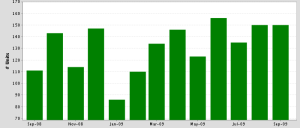
Here is the San Mateo County data. Lets take a look at home sales in single family residences within the 250k to 600k price range over the last year. Let’s start with the number of sold properties per month:

sold_props

Home sales in San Mateo county for this price range have been trending upward, but have been stagnant over the last three months. A lot of economists and real estate professionals attribute this to sales spurred by the first time homebuyer tax credit, set to expire at the end of November. While this number is a 35% increase over last year, we should be cautious before we all get giddy over the home sale numbers,. In fact, lets take a look at the homes for sale in the same data set:

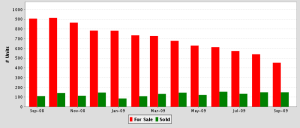
for_sale_props_smc

So the amount of real estate ‘product’ on the market has dropped significantly over the last year, down 50% in the past year. So less homes on the market, more competition for homes by motivated buyers. This also results in fewer days on market, another key indicator being used in the “recovery is nigh” discussion.  

Here I am taking a look at supply and demand, or homes available vs. homes sold in any given month. According to this, available homes are trending downward while home sales trend upward.

supply_demand_smc

Supply is down 50%, and demand is up 35%. This all looks rosy, does it not?

This problem I have is that I  disagree with the economists assessments that these are all first time homebuyers purchasing homes in move in condition. The amount of short sales and REO’s on the market, which tend to attract investors and not first timers, is significantly higher than traditional sales. What I think the economists are really missing here is granularity into home sales. For example, the decreasing amounts of homes for sale lead us to believe that move-up buyers, those who own a home but are looking to sell and move up, are not active in the market. I should also mention the moratorium on new REO’s for sale. This is a problem that causes a glut in the purchase market; first time homebuyers are ready, willing and motivated to buy, but there is no product to move them into. The move up buyers are not selling, and hence the product supply is down. And the investors are snapping up the short sales and REO’s with all cash offers, skewing the sales and average days on market numbers.

Moral of the story – Just because we, as realtors, can point at numbers like average days on market trending downward, home sales trending upward and supply/demand numbers getting closer to equilibrium, we need further granularity in these numbers to truly understand the big picture. Short sales still dominate the available product, and like it or not those make buyers and agents nervous. The move-up buyers(sellers) are watching the market intently and holding the rich vein of traditonal listings they offer with them. Average days on the market is tied to homes for sale, so less product equates to less time on market.

I’m feeling much better about things, but there is a lot more to look at before I’m ready to jump on the recovery bandwagon.

Filed under: Buyer's Blog, Market Data, Seller's Blog

How to Cost a Solution in Azure

Manage Cloud Costs with Resource Tagging

Pages

Follow me on Twitter