Joe Capote

Real Estate Transfer Disclosure Statement Changes for 2011

As part of a traditional residential 1-4 unit sales transaction, it is the seller’s responsiblity to provide the Transfer Disclosure Statement, or TDS. The TDS (known as California Association of Realtors form TDS) is the seller’s disclosure to prospective buyers of what he/she knows and is aware of regarding the property being sold. Things that are disclosed on a TDS include:

  • Items that the subject property contains such as appliances, pools or spas, sprinklers and air conditioning among other things.
  • The sellers knowledge of any significant defects or malfunctions in the subject property, for example leaks, foundation or roof issues.
  • If the seller is aware of any other known material facts such as hazardous materials, structural issues or repairs, room additions, zoning violations and homeowners association information. 

On January 1st  a new version of the Real Estate Transfer Disclosure Statement was mandated by the legislature.  If the prior version of the RETDS was given to the buyer before January 1,2011, then it is fine to use it. Listings that are not in escrow prior to January 1 will require the new Real  Estate Transfer Disclosure Statement. That means changing out and redoing any RETDS in listings that was not in escrow prior to January 1. 

The changes to the new TDS:

  1. Inclusion of the Smoke Detector Statement Compliance and Water Heater Statement of Compliance (new Section “D” on Page 2).
  2. The addition of Carbon Monoxide Devices in Section “A” on Page 1 as well as the reference to carbon monoxide device at the end of Section “B” on page 2.  (Reminder that Carbon Monoxide Devices become a mandatory installation as of July 1, 2011 for existing single-family dwelling units).

In transactions where the seller is a trust, a bank (REO) or the subject property is a commercial/multi-unit(5 or above) the TDS may not be required.

The Seller’s Supplemental Statutory and Contractual Disclosures (C.A.R form SSD) is often discussed since it is where the seller discloses knowledge of a death on the property within the past three years. This form will remain unchanged for the time being.

For more information regarding selling your home, visit me on the web at www.JosephCapote.com

Filed under: Buyer's Blog, Realtor Trends, Seller's Blog, , ,

How Eliminating the Mortgage Interest Deduction Affects the San Bruno Park School District

Every once in a great while, the lines between Real Estate and Education blur. For example, putting a parcel tax on the local ballot to fund your local school district’s budget shortfall has been a hot ticket item for many localities over the last year. Once again real estate and education cross paths as congress fires up discussions regarding possible elimination of the mortgage interest deduction as a means of addressing the burden of the federal budget deficit.

As many of you know, owning a home has concrete tax advantages. The United States is one of the few if not only countries in the world that allows taxpayers to use mortgage interest as a way to reduce their tax responsiblity. This deduction has been instrumental in supporting a healthy housing market, including single family homes and investment properties. Yet once again the mortgage interest deduction has found itself in the crosshairs of a congress starving for ways to reduce the ever-growing federal deficit.

From the outside looking in, I can see why congress would want to consider this. And for the millions of people who don’t currently pay mortgage interest, the idea of reducing or eliminating the MID seems all well and good. Congress and the President Obama’s Fiscal Deficit Commission are throwing around some pretty hefty numbers in terms of deficit reduction if the MID is eliminated in part or even in full.

It would also be of little secret that the National Association of Realtors opposes this idea. I won’t lie to you, Realtors like myself have vested interests in the success of the real estate market. The last thing the real estate community wants is to see is a drop in the sales volume and median home price. However, if the mortgage interest deduction is eliminated, it is clear that the demand for home ownership will wane.

I believe Congress, and those who support the elimination of the MID, are well meaning but are missing the big picture. Eliminating the MID has very direct consequence on every home owner who pays a mortgage. It will also have a direct effect on home prices and sales as well as real estate investments and those who own condos or PUD’s. I mean, let’s face it. Who would ever consider purchasing a condominium without the benefits of the mortgage interest deduction?

But back to my point. There are also severe indirect consequences of MID elimination that congress may not be thinking about. On December 8th I watched as the San Bruno Park School District board discussed how they were going to address what appears to be a 4.9 million dollar shortfall in the current budget. The majority of the shortfall is a result of declining property tax revenue. For those who may not know, a large portion of a district’s revenue are tied directly to property tax revenue. Declining property values result in declining property taxes and ultimately mean less money for school districts.

So the formula as I see it is simple. Eliminating the MID will result in less demand for home ownership. Less demand for home ownership results in declining property values. Declining property values result in declining property tax revenues. Declining property tax revenues equal less money for school districts.

So, even if you don’t own a home or pay a mortgage, schools in the SBPSD receive less money. As a parent or a student, you get the added benefit of watching the SBPSD play yet another round of “Spin the Wheel of Reduced Education Services and Capital Improvements”, a game that has become all too well-known in our school district and others across the state.

But there’s more. If you own a home or multi-unit investment, you also know that home prices and rents are in part influenced by local schools. So underperforming schools have a direct impact on home prices and rental income whether or not you use the MID as a means of lowering your tax base. So ultimately, your home or your investment will be worth less money.

And don’t even get me started on how the further decline in property values will affect a San Bruno real estate market that is just starting to see a decline in distressed properties.

I’m imploring Senators Barbara Boxer and Dianne Feinstein to consider this when discussing the elimination of the mortgage interest deduction. Are you?

For more information, please visit me on the web at www.JosephCapote.com.

Filed under: Buyer's Blog, Realtor Trends, Seller's Blog, , , , ,

Homeowners Beware: Foreclosure Rescue Scams

With the recent rise in foreclosures, foreclosure-related scams have exploded onto the real estate scene. These so-called “foreclosure rescue companies” claim they will help save your home, but in reality are out to make a profit – at your expense.

If you are at risk of or in foreclosure, here are some of the red flags to watch out for:

  • Asks for money upfront before providing any service.
  • Instructs ou not to contact your lender, lawyer, housing counselor, family, friends, or others.
  • Asks for mortgage payments to be made directly to his or her company or a bank account set up by that person rather than your lender.
  • Requires payment only in the form of cash, cashier’s check or wire transfer.
  • Promises to stop the foreclosure process, no matter what the circumstances.
  • Advises you to transfer your property deed or title to his or her company.
  • Offers to fill out paperwork for you.
  • Encourages you to lease your house and back it back over time.
  • Asks for something to be done immediately and without delay. This includes pressuring you into signing paperwork that you have not had to read thoroughly or not not fully understand.
  • Offers to buy your house for a fixed price that is not set by the housing market at the time of sale.
  • Asks for you to give a power of attorney.
  • Asks for signatures on a grant deed or deed of trust.
  • Asks for signatures on a document that has lines left blank.
  • Fails to provide copies of signed documents.
  • Refuses or fails to put an oral promise in writing.

Report Fraud

If you have been a victim of a foreclosure-related scam or approached by a scam artist, you may report the incident to the following organizations and government enforcement agencies:

For even more information regarding foreclosure rescue scams and foreclosure avoidance, contact me or visit my website at www.JosephCapote.com.

Filed under: Buyer's Blog, Foreclosure Avoidance, Seller's Blog, , ,

What is HAFA?

WHAT IS HAFA?

The Home Affordable Foreclosure Alternatives (HAFA) Program is a government‐sponsored initiative overseen by the US Treasury Department and administered by Fannie Mae assisting all Home Affordable Modification Program (HAMP)‐eligible homeowners in avoiding foreclosure, specifically through short sales or deeds‐in‐lieu of foreclosure. HAFA was announced on November 30, 2009 in a HAMP Update titled Introducing the Home Affordable Foreclosure Alternatives Program.

 HAFA directs lenders to assist eligible homeowners in quickly and effectively implementing short sales or deeds‐in‐lieu by providing financial incentives to lenders that carry out foreclosure alternatives through the program’s guidelines set forth in Supplemental Directive 09‐09 Revised (revised March 26, 2010). The program was introduced in part with the intent to remove the stigma from short sales and help keep communities from being destroyed through massive foreclosures. HAFA in its current state is only applicable to conventional‐type, non‐Governmental Serviced Enterprises (non‐GSE) mortgages and therefore does not apply to loans owned or guaranteed by Fannie Mae or Freddie Mac. These organizations may have plans to release their own versions of HAFA.

 DETAILS OF HAFA

 HAFA was introduced to simplify and streamline the short sale process. HAFA accomplishes this in the following ways:

  • Compliments HAMP by providing viable alternatives for borrowers who are HAMP eligible
  • Uses standard processes, documents and timeframes
  • Provides financial incentives to borrowers, servicers and investors
  • Requires that borrowers be fully released from future liability for the debt
  • Utilizes borrower financial and hardship information collected in conjunction with HAMP, eliminating the need for additional eligibility analysis
  • Allows the borrower to receive pre‐approved short sale terms prior to the property listing
  • Prohibits the servicer from requiring, as a condition of approving the short sale, a reduction in the real estate commission agreed upon in the listing agreement

HAFA provides financial incentives as follows:

  • Homeowners qualify for $3,000 (updated March 26, 2010; was previously $1,500) in Borrower
  • Relocation Assistance after a short sale or deed‐in‐lieu has been completed (may classify as taxable income in some cases)
  • Financial incentives for servicers participating in the program include up to $1,500 (updated
  • March 26, 2010; was previously $1,000) servicing bonus upon completion of a short sale or deed‐in‐lieu
  • Financial incentives for investors include up to $2,000 (updated March 26, 2010; was previously
  • $1,000) for those who allow a total of up to $6,000 in short sale proceeds to be distributed to subordinate lien holders. This reimbursement will be earned on a one‐for‐three matching basis
  • Lenders pay all servicing fees — homeowners have no out‐of‐pocket expenses

For more information regarding foreclosure avoidance, please visit my foreclosure avoidance resources online or email me at JCapote@apr.com.

Filed under: Buyer's Blog, Foreclosure Avoidance, Seller's Blog, , ,

San Bruno Housing Market Remains Steady in October

The San Bruno Real estate market made some modest gains in key areas, but overall remained steady over the past month. According to data supplied by MLSListings, San Bruno saw a 11.5% drop in the number of available homes on the market. The number of homes sold during the month rose slightly from 19 to 22, while the number of pending sales dipped by nearly half.

This data is in line with what Realtors expect to see during this time of the year. The decrease in the number homes on the market can be attributed to the holiday season as sellers put their plans on hold until after the holidays. The rise in the homes sold represent buyers snatching up homes at good price points before the holiday season.

The median price of a single family residence in San Bruno dropped by nearly 5% to $534,000. This would support the increased amount of home sales at lower price points.

The investor market cooled substantially during the month of October. According to MLSListings, there were no sales of multi-unit residential homes (2-4 units and multi-unit apartment buildings) during the month of October. Of the 16 available multi-unit homes on the San Bruno market, one-quarter of them went into a pending sale status during the month. This indicates that even though it’s a traditionally slow time of the year, investors are moving on well priced investment properties. This should translate to closed escrows in December.

In what continues to be an encouraging sign of a recovering market, in my opinion, is the continued decline of distressed properties as an overall percentage of the San Bruno market. A distressed property is a bank owned foreclosure or a short sale in which the lender will work with the seller to sell the home at less than what is owed on the mortgage. The number of these distressed properties dropped to 26, representing 40% of the available single family homes on the market. Distressed properties had made up nearly 60% of the available homes on the market earlier this year.

Interested in buying or selling real estate? Check out my website for all kinds of resources for buyers, sellers and foreclosure avoidance.

Filed under: Buyer's Blog, Market Data, Seller's Blog,

Purchasing a Short Sale

According the the Mortage Bankers Association, one in seven borrowers nationwide is behind on their mortgage, or not making payments whatsoever. This has resulted in a glut of distressed properties on all markets nationwide. San Mateo County is certainly no different. The resulting distressed properties on the market, particularly short sales, can result in the purchase of a home at a good price. However, buying a short sale is more difficult than it sounds. Here are a couple of things to consider before purchasing a short sale.

Short sale is a sale where the lender agrees to sell the property at less than what is owed on the mortgage. Short sales require lender approval and lenders do their best to determine the current market value of a home before approving the final sales price.

It is important to remember a couple of points when considering the purchase of a short sale. Firstly, the list price is very rarely the approved sale price. In fact, a list price in a short sale is little more than one person’s opinion of what a lender is willing to accept. Furthermore, short sales are routinely priced under market value in order to spur offers. 

Ultimately, the lender makes the final decision on price, regardless of the seller’s opinion. The lender does this through a broker price opinion (BPO) or even a full appraisal. So even though you as a buyer may have a signed contract at a lower price, the bank may approve the short sale at a higher price based on current market conditions. The lender approved price is the final sales price, regardless of what the offer stipulates.

Secondly, there is nothing short about a short sale. While the offer process may be quick, all short sale offers are written contingent upon the seller getting short sale approval from the bank. This approval time represents the lion’s share of the short sale timeline and can be dictated by a number of different factors including the lender’s ability to process the short sale package, the seller’s ability to submit complete documentation to the lender and any back taxes, mortgage payments or property liens that need to be negotiated prior to close of escrow.

Lastly, as a buyer in a short sale transaction, it is far more likely that you will be asked to bring money to escrow to pay off non recurring closing costs. The premise of a short sale is based on a verfiable financial hardship being experienced by the seller. Therefore, there is a high chance that missed mortgage payments, back taxes, mechanic’s liens and even abatement fees have been levied against the property. Since the seller is generally in no postition to pay these off, the buyer may be asked to pay some or all of these costs in order to close escrow. It is imperative that buyers and their agents understand the overall picture of what is owed by the seller before make a short sale purchase. Countless transactions have fallen through as a result of this and buyers should understand that being asked to pay of seller obligations to close the escrow is a probable scenario in a short sale purchase transaction.

Short sales can help sellers avoid foreclosure and save their credit ratings. The can also represent a good deal depending on the condition of the property and the number of lenders involved. However, buyers of short sales really need understand the end to end process before considering a short sale purchase.

If you are considering purchasing a short sale or are suffering from a financial hardship and need more information regarding options to avoid foreclosure, visit my foreclosure avoidance resources on the web at www.JosephCapote.com

Filed under: Buyer's Blog, Seller's Blog, ,

A Classic Eichler for Sale in Burlingame

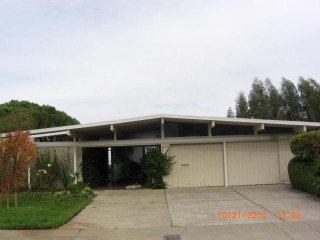
3018 Atwater Front

Just off of Trousdale boulevard in Burlingame’s Mills’ Estates  area lives a street named Atwater Drive. Atwater drive is home to a very small pocket of Eichlers. Eichlers are  homes designed and built by renaissance developer Joseph Eichler in the mid to late 20th century. I just had the opportunity to view the latest Eichler home to come on the market, 3018 Atwater Drive in Burlingame..

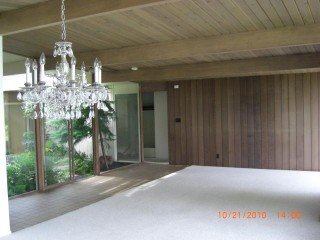
This home is a classic Eichler and proudly displays all of the design characteristics that Eichler himself held so dear. You enter the home through the classic Eichler atrium. The atrium is lined with greenery and flows into the main living area as sliding glass entrances into the bedrooms.  The home embraces the classic Eichler philosophy of “bringing the outside in’ by using plenty of floor to ceiling windows, natural light and an open floor plan.

The home also displays all of the architectural and functional choices of the Eichler design. The post and beam construction, the sloping roof and sliding doors right down to the radiant heating infrastructure. Of course, the wonderful entryway atrium is classic Eichler style. In addition, the home has a fabulous view of the San Francisco Bay and Mills Field Airport. The ceiling to floor windows in the main living area proudly showcase this multi-million dollar view and set a panoramic setting you will have a challenging time finding in the Eichlers of the San Mateo highlands, Palo Alto or Sunnyvale.

The View

This Eichler beauty is a four bedroom, three bathroom home in a desirable Burlingame location, close to the 280 freeway. It is supported by an excellent school district and education foundation. The kitchen and the bathrooms are quite dated and could use some TLC. Remodeling of the kitchen is probably a must, but the open floor plan offers enough space for any designer to make a dream kitchen.

This home is currently offered at $1,050,000 and will not last long. If you would like to see this home or find out more about Eichlers in the Bay Area, please contact me. I look forward to hearing from you.

Atwater Living Area

The home is a bank owned foreclosure and is listed by my colleague, Louie Khoury of Alain Pinel Realtors (who happens to set down the hall from me). He has given me express permission to showcase his Eichler listing as part of my blog.

If this home doesn’t suit your tastes, I can help you find plenty of fine homes from San Bruno to San Mateo.

3018 Atwater Living Area


Filed under: Buyer's Blog,

Avoiding Foreclosure: What is a Short Sale?

1 in 7 borrowers across the country are not paying their mortgage. Look down your street and count seven doors. One of your friends or neighbors are struggling to make their mortgage payments, or are missing their payments altogether. According to the Mortgage Banker’s Association’s second quarter 2010 National Delinquency Survey, nearly 14% of loans are in foreclosure or are past due.

For homeowners struggling to make mortgage payments, there are more options today than ever before. Short sales now account for more than 12 percent of all residential real estate sales. In San Bruno, short sales account for nearly 50% of the available housing market. Helping homeowners avoid foreclosure and understanding the options available to them is something I am passionate about. In an effort to continue to advocate on foreclosure avoidance in my community, I offer this small background on short sales.

What is a short sale? To put it simply, a short sale transaction is a sale of a property in which the outstanding debt (in the form of mortgages – such as purchase loans, refinance loans, home-equity loans, or one of the various other types of loans secured by your property) was more than the price for which the property was sold. Example: 1st and 2nd mortgages totaled $470,000.00 and the property was sold for $325,000.00. The sale price was $145,000.00 “short” of the amount that the seller had originally borrowed – thus the term “short sale.” Since the banks/lenders were essentially paid back less than what you borrowed, you could be deemed to have received a debt “forgiveness” of $145,000.00. A sale of this type requires bank/lender approval.

While there are many reasons why a bank/lender would choose this manner of sale, the important question is: What should you (as the seller of the property) know about this type of sale? If you participate in this type of sale, please be aware that:

  1. In some instances, you may be sued by the lender/bank for the money that was “forgiven”.
  2. The amount you did not pay back, which is a form of “debt forgiveness”, may be taxed by tax agencies for the “forgiven” amount. In the example above, you may be taxed on $145,000.00. For Mortgage Forgiveness Debt Relief Act and Debt Cancellation tax information visit: http://www.irs.gov/individuals/article/0,,id=179414,00.html
  3. If there are other lenders or lien holders (such as a 2nd or 3rd loan), the holders of the second or subordinate liens, may file a deficiency judgment in civil court against you to get their money back, even though the first lien holder allowed debt forgiveness.

These are just three major consequences of choosing to sell through a short sale. Therefore, it is very important that you seek:

  1. A licensed and qualified real estate agent to represent you in these types of transactions. To determine if the person is licensed by the California State Department of Real Estate and/or to check on a license status, please visit our website at http://www.dre.ca.gov.
  2. The advice of an accountant. To obtain the status of a Certified Public Accountant or a Public Accountant, please visit the California Department of Consumer Affairs – California Board of Accountancy at http://www.dca.ca.gov.
  3. The advice of a lawyer. To obtain the status of an attorney, please visit the State Bar of California at http://www.calbar.gov.

In addition, contact a free United States Department of Housing and Urban Development (HUD)-approved housing counselor at http://www.hud.gov or contact your lender directly.

In April of 2010, the federal government will offer financial incentives to push short sales through a program called Home Affordable Foreclosure Alternatives. The program is designed to spur home sales and one of its components will be providing government payments to homeowners (for moving and/or relocation expenses). For more information, please visit www.makinghomeaffordable.gov.

Foreclosure is avoidable and homeowners need solutions. Today more than ever, they need educated professionals to help them learn about their options. As a Alain Pinel Distressed Property Certified Agent, I can help assist homeowners in distress. If you would like a private consultation to discuss your foreclosure avoidance options, please contact me. I look forward to hearing from you.

Filed under: Buyer's Blog, Seller's Blog

Announcing my Partnership with Alain Pinel Realtors!

This week I decided to switch office affiliations. I’ve joined Alain Pinel Realtors in Burlingame. Alain Pinel is an established company with a track record of success throughout the bay area. I’m stoked to have joined them! Check out my new website!

My mother Marilyn, who started her real estate career in 1974, once wrote an article on changing office affiliations. Though many things have changed since she wrote that piece, many things have remained the same. As per her advice, I did plenty of research before I made the jump. I really though about what was important to me and what I wanted out of my career as a Realtor. I really wanted to work for an established company with a stong online presence and name recognition. I also knew I wanted to work for a company that could provide superior marketing tools and cutting edge technologies. Finally, I really wanted to work for a company that was professional and team oriented.

After interviewing with many companies, I really felt like Alain Pinel Realtors in Burlingame fit all that criteria. I am proud to announce my new partnership with Alain Pinel and look forward to meeting the needs of my clients for years to come!

Filed under: Buyer's Blog, Market Data, Realtor Trends, Seller's Blog, Technology, Uncategorized

Deductible Closing Costs in a 1031 Tax Deferred Exchange

When participating in a 1031 tax deferred exchange, it is wise to know what closing costs are tax deductible and which are not. Certainly it’s good business for one to consult with an accountant or a tax professional on this, but here is the quick and dirty overview.

Costs that can be deducted

  • Real estate commissions
  • Title insurance premiums
  • Closing or escrow fees
  • Legal fees
  • Transfer taxes and Notary fees
  • Recording fees
  • Costs related to the 1031 exchange such as Qualified Intermediary Fees

Costs that cannot be deducted

  • Mortgage points
  • Assumption fees
  • Credit Reports
  • Lender’s title insurance
  • Prorated mortgage insurance
  • Loan fees such as application fees
  • Property taxes
  • Utility charges
  • Association fees
  • Hazard insurance
  • Credits for lease deposits
  • Prepaid rents and security deposits

Interested in finding out more about how a 1031 deferred exchange can help you make real estate investments while deferring your tax obligations, visit my website at www.JosephCapote.com.

Filed under: Buyer's Blog, Seller's Blog,

How to Cost a Solution in Azure

Manage Cloud Costs with Resource Tagging

Pages

Follow me on Twitter